


A guide to trekking the Rwenzori Mountains before or after race day
Most people come to Kasese for the marathon. They run 42km starting on the Equator inside Queen Elizabeth National Park, finish under the Rwenzori Mountains, collect their medal, and go home. What a lot of them don't realise until they're standing at the finish line is that those mountains behind them — the ones that have been watching the whole race — are climbable. And not just climbable. They have glaciers.
The Rwenzoris, also called the Mountains of the Moon, sit on the border of Uganda and the Democratic Republic of Congo. The Greek scholar Ptolemy believed they were the source of the Nile. Their peaks are permanently snow-capped despite sitting almost exactly on the Equator. The highest point, Margherita Peak on Mount Stanley, stands at 5,109 metres — the highest in Uganda and third highest in Africa.
In other words: You can run a World Athletics Label road race on Saturday and be planning a glacier crossing for the following week. You will not regret it.

The summit: two routes to Margherita Peak (5,109 m. asl)
There are two ways up:
The Central Circuit starts at Mihunga gate and takes seven days, passing through camps at Nyabitaba, John Matte, Bujuku, and Elena on the way up, then descending via Kitandara and Guy Yeoman. It's operated by Rwenzori Ranges Hikers Association (RRHA) and Rwenzori Mountaineering Services (RMS).
The Kilembe trail approaches the summit from a different direction with its own set of mountain huts, and is operated by Rwenzori Trekking Services (RTS).
What makes either route tough isn't the altitude — it's the terrain. The rainforest and bog sections are relentless. Mud past your knees is a regular occurrence. The reward is two glacier crossings, vegetation zones found almost nowhere else on earth, and a summit stood on by very few people.
A few things to know before you commit:
- Best seasons are the dry periods: December to February, and June to August. With climate change the weather can be unpredictable, so plan to find rain on the mountain.
- Budget from around USD $1,500–$2,500 depending on the route, gear rental, and package.
- Altitude sickness becomes a real concern above 4,000 metres. Ascend slowly, drink plenty of water, and consider carrying Diamox. Consult a doctor first if you have any respiratory or circulatory conditions.
- Tip your guides, porters, and chefs. For a fraction of what the trip costs you, they carry your gear and cook your meals at altitude in the cold.


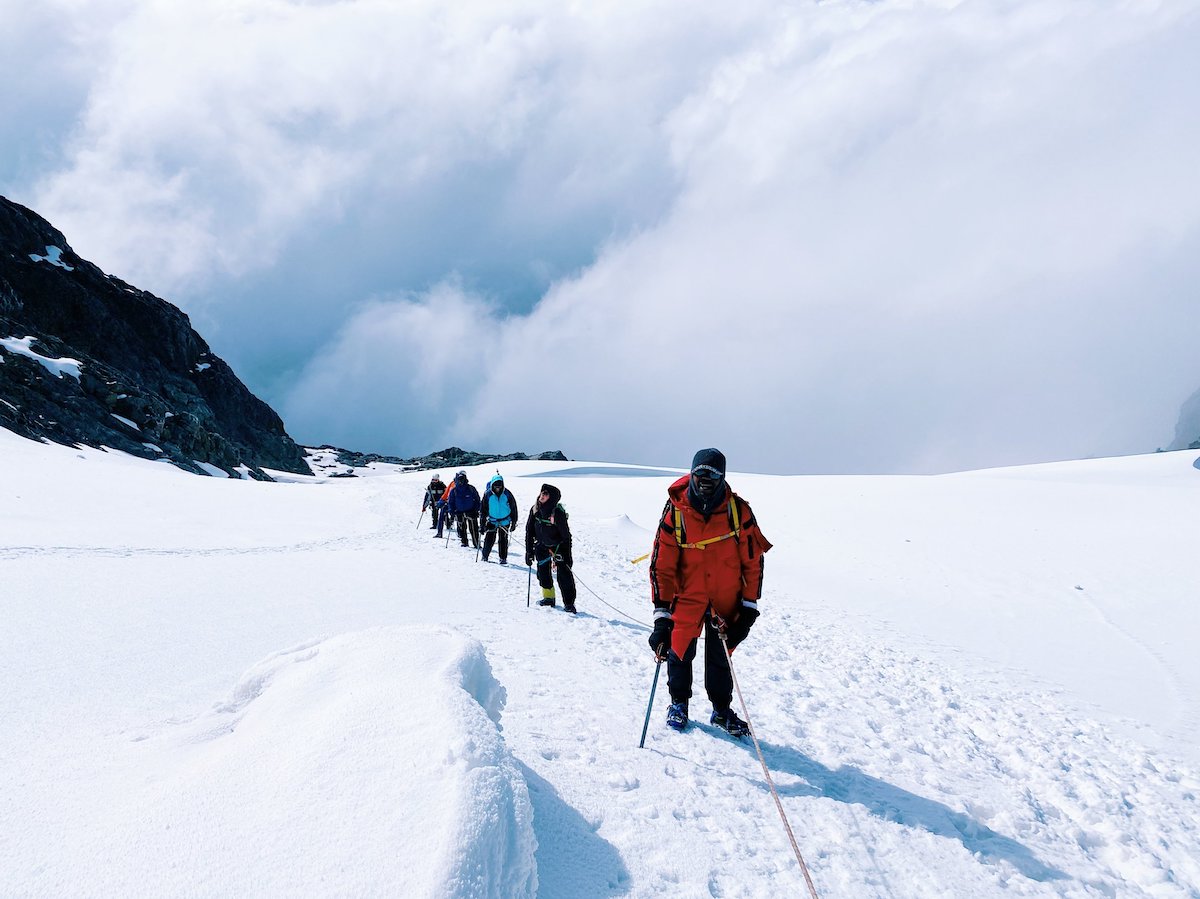

Not ready for seven days? The mountain still has plenty for you.
For many runners arriving in race week, a seven-day summit climb simply isn't realistic. That's fine — the Rwenzoris reward you at every level.
The Lake Mahoma trail is a one-to-two day hike into the lower mountain forest to a beautiful crater lake. Accessible, stunning, and a genuine taste of the mountain without the full commitment.
Day trips from Kasese into the foothills offer shorter trails through thick forest, river crossings, wildlife, and views that would be the highlight of most people's year. You don't need to be chasing the summit to make it worthwhile.
Planning your trip around race day
The sequencing matters. Running 42km and immediately starting a seven-day mountain climb is an impressive ambition and a questionable idea. Two options work well:
- Race first, trek after. Run on 22 August, take one to two days to recover in Kasese, then head to the mountain.
- Trek first, race after. Finish your climb, descend to Kasese, and toe the start line on race day. Your legs will have opinions about this. Feel free to ignore them. Rethink the decision when you reach Kilembe.
Gear essentials — sort this out with your operator in advance, as rental for some of the gear is available in Kasese:
- Hiking boots (for first day, and summit day)
- Gumboots (if you're heading into the mountains properly, the bog is relentless)
- Sleeping bag rated to -10°C
- Waterproof layers head to toe (the mountain loves rain)
- Warm clothes, incl gloves, socks and beanie. The mountain is cold even if Kasese is not!
- If you go all the way to Margherita you need crampons, an ice ax, helmet, and other glacier crossing gear. This can be rented in Kasese.
The Rwenzoris have stood over this finish line for millions of years. They're not going anywhere. But your window to run the race and climb the mountains in the same trip is right now.
All photos: Maren Hald Bjørgum
.jpeg)