


Abel Chelangat almost didn't make it to Kasese.
The young runner from Bukwo, a highland district tucked into Uganda's eastern border with Kenya, had no way to cover the journey. Bukwo to Kasese is not a short trip — it cuts across the country, a full day of travel each way. Without support, it simply wasn't going to happen.
The Tusker Lite Rwenzori Marathon crew organised a bus. Chelangat and around 60 other athletes from the Kapchorwa and Bukwo areas climbed on board and made the trip west.
What happened next changed his life.
Chelangat ran his first ever marathon at the 2024 Tusker Lite Rwenzori Marathon. He stayed with the lead group for 41 kilometres, then in the final stretch he broke away decisively — creating a gap that nobody could answer. He crossed the finish line in Kasese town with the Rwenzori Mountains behind him, a first-time marathon runner who had just won.
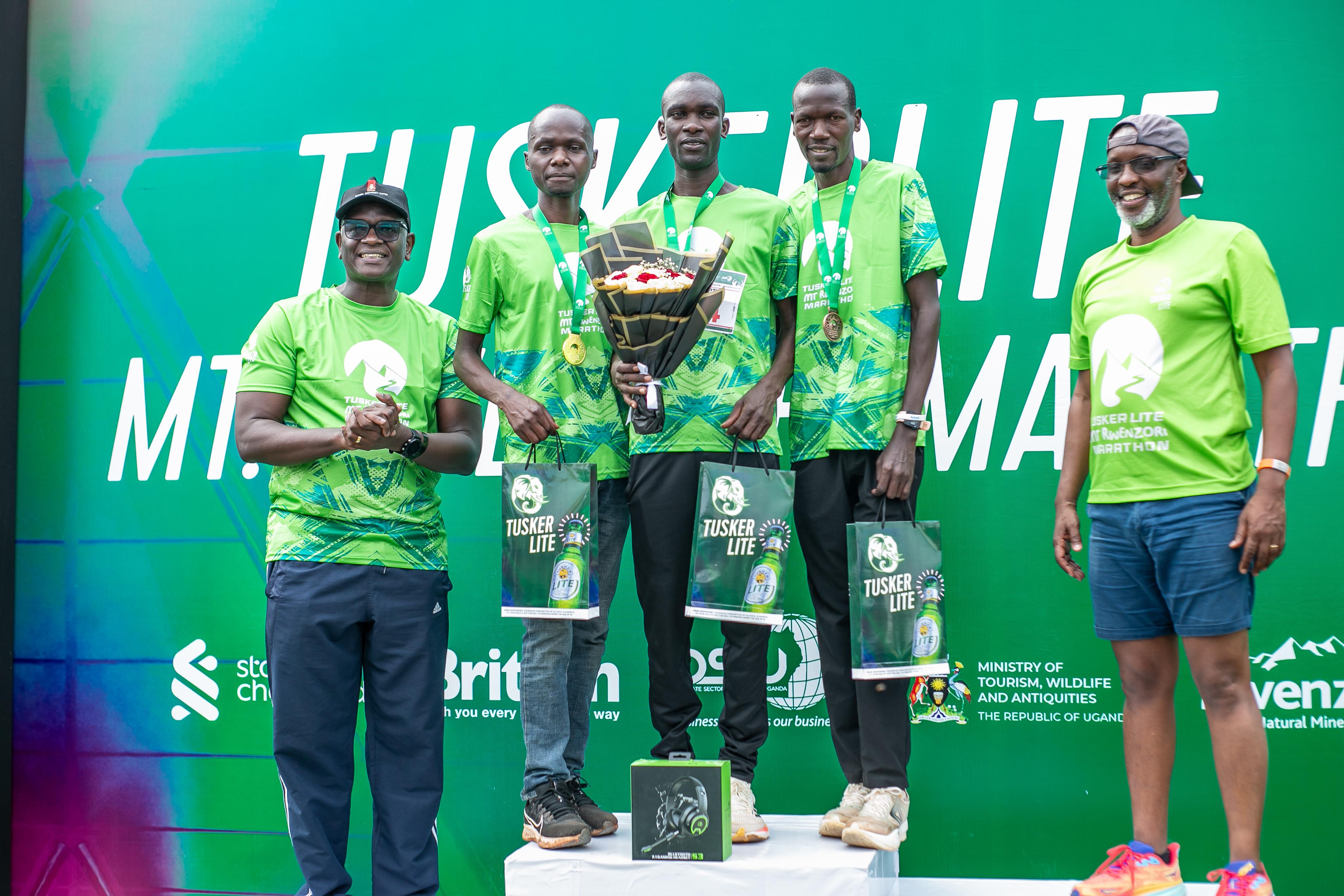
His performance put him on Adidas' radar, and an invitation followed — to Porto, Portugal, to compete in the Porto Marathon in November 2024. He won that too.
From there, the trajectory only steepened. Riyadh Marathon. Rabat International Marathon. Then came Tokyo — the World Athletics Championships — where, in his first ever world championship appearance, he finished fifth in 2:10:11.
In March 2026, he ran a personal best of 2:04:57 to win the Barcelona Marathon, holding off two Kenyan rivals in the closing stages.

What sets Chelangat apart is not just the results. It's what he chose to do with them.
The prize money from that first win in Kasese didn't go into a pocket and stay there. He used it to fund training camps, transport, nutrition, and gear — for himself and for fellow runners back in Bukwo.
"I know what it feels like to struggle just to prepare for a race," he has said. "No one should miss an opportunity just because of lack of basics."

He trains every morning from 5am. Light mobility work, then 25 kilometres before most people have started their day, and another 10 in the evening. Speed sessions on Tuesdays and Thursdays. Long runs on Saturdays, sometimes 38 kilometres through the terrain that shaped him.
"The terrain where we're born makes us strong," he says. "I see the hard training we're doing — it makes us fight easier when we compete."
He is clear-eyed about what this sport demands. "You really have to like running. You can't just run for money."


Uganda already has Jacob Kiplimo — world half marathon record holder, and currently the third fastest marathon runner in history. It has runners like Victor Kiplangat and Joshua Cheptegei. And Kapchorwa and Bukwo is bursting with talent that wants to follow in their footsteps.
What has been missing are the structures to make it happen. That bus from Bukwo to Kasese was one such structure. So was the investment in World Athletics certification that meant Chelangat's winning time counted — formally, globally — toward qualification standards.
A performance that doesn't make it onto the official record is a performance the world never sees.

Abel Chelangat is now ranked 49th in the world in the marathon. He is 34 years old and running the fastest times of his life. And he is actively building the path behind him so the next runner from Bukwo doesn't have to wonder how to get to the start line.
We are proud to have been part of where this story began.
Have you registered for this year's edition of the Tusker Lite Rwenzori Marathon yet? Don't delay, early bird tickets are available now!
.jpeg)